How 3D Printing and Better Materials Improve Comfort, Safety, and Durability
People often hear about innovation in orthotics and prosthetics and picture a robotic limb, but some of the most useful advances are more practical. 3D printing that captures your custom fit, lighter materials that need fewer repairs, and the improved stability that comes with these advances can have a real effect on how a device feels at the end of an ordinary day.
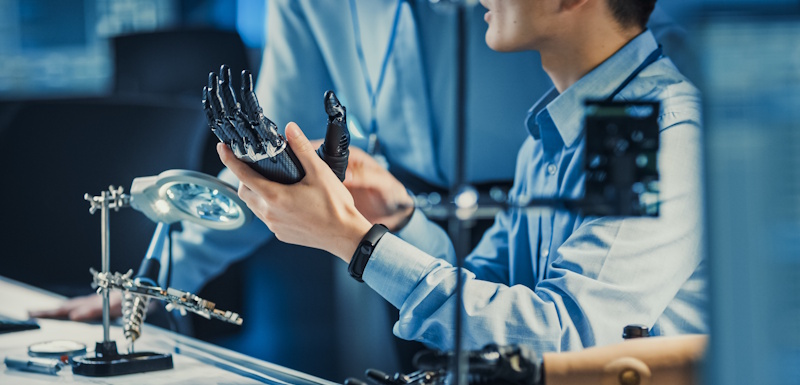
A 2024 editorial in BMC Musculoskeletal Disorders makes the case directly. Its authors write that 3D printing and other digital techniques now let prosthetic and orthotic devices be built to fit each person’s unique anatomy, and that patients who once struggled with poorly-fitted devices report greater comfort and easier movement. They also credit lighter, more durable materials with reducing repairs and replacements, and they anticipate sensors and robotics that help a device respond to the ground underneath it.
For patients, those developments answer practical questions:
- Will the device fit comfortably?
- Will it keep me steady?
- Can it hold up to my routine?
The best prosthetics advances help a device work better in three areas: comfort, safety, and durability. Those considerations guide every orthotics and prosthetics fitting at our Overland Park clinic. Technology can give a practitioner more information, but your anatomy, activities, and feedback still must be taken into account.
Whether you’re weighing a first device or exploring advanced prosthetics, call us at (913) 338-2672 and we’ll talk through which of these innovations apply to your limb, your goals, and your typical week.
3D Printing Increases Comfort With Better Scans and Fittings
The socket is where a prosthesis meets your body, so small differences in shape can change pressure, stability, and comfort. A good fitting begins with careful measurements and impressions.
The 2024 editorial discusses how digital scanning and 3D printing give that work a more exact starting point. A scan turns the contours of your limb into a digital file which enables a better prosthesis. Printing from that file reproduces the shape the practitioner signed off on and leaves less room for human error.
New tools never replace the discussion in the fitting room, however. If your prosthetic leg feels secure on level ground but shifts on stairs, your practitioner needs to know. A scan or measurement is useful, but your description of daily life is essential for your comfort.
Contact us online and tell us where you’re having trouble with your current device, and we’ll look at whether a better-fitting socket would solve it.
Digital Fabrication Drives Down Costs for Orthotics and Prosthetics
3D printing has opened new possibilities for greater comfort, but digital fabrication is also expected to make customized devices more accessible and cost-effective, enabling some patients to upgrade devices they’ve previously had to live with because a newer version is too expensive.
Digital scans don’t take the place of a real practitioner or custom consultation, however. Technology will never be able to tell you completely whether a part is right for your body or strong enough for your routine. Someone choosing a prosthetic foot for long workdays may need a different balance of weight and durability than a person choosing a prosthetic hand for particular tasks at home.
At Cotton Orthotic and Prosthetic Associates, we start with your needs, then recommend the components and fitting process that make sense for you. We’ve built our practice on custom, affordable solutions, so ask about a device durable enough for your activity level by calling us at (913) 338-2672.
Materials Affect Comfort, Durability, and How a Device Looks
Modern orthotics and prosthetics materials have become more lightweight, durable, and comfortable, and require fewer repairs and replacements, which also keeps costs down. Lighter components may reduce the effort of moving a device through a long day.
Perhaps even more important, researchers note that modern prosthetics look more natural, which cuts into the stigma some people may feel about wearing one, and can have a positive impact on self-esteem and psychological well-being. A device you feel comfortable being seen in is one you tend to wear all day, and steady wear is part of what makes it useful and therapeutic.
No single material suits everyone, though. Your skin may be more sensitive and require different finishes. Light materials aren’t always the best choice if your prosthetic or orthotic requires heavy use. Tell us about your job, your hobbies, and how your skin has handled past devices, and we’ll weigh the options against the life you’re actually living. Contact us online to discuss.
New Technology Makes Prosthetics Safer and More Stable
The 2024 editorial looks even further ahead, describing robotics and sensors that make devices more adaptable and responsive. They imagine a prosthetic leg that adjusts on its own to changes in terrain for a more natural walking experience.
Devices with such automatic adjustment are still developing, but we can tell you about any available technological advance at Cotton Orthotic and Prosthetic Associates. Schedule a consultation by calling (913) 338-2672, and we’ll help you find a well-fitted, well-aligned device that behaves predictably, even on uneven ground.
Advanced Prosthetics Still Need Ongoing Care
Even the most advanced prosthetics need a well-fitting socket and regular review. Residual limbs can change in shape or volume, especially after surgery. Activity levels change, too. A prosthetic leg fitted for short distances may need another look when you return to work, start traveling, or become more active.
The new technologies we’ve mentioned still need the same level of personalized care. Even a neural and muscular interface like the one mentioned in the editorial, which allows a person to control a prosthetic arm with their own nerve and muscle signals, still sits on a socket. That socket requires a practitioner’s careful fitting and supervision.
Talk With a Prosthetics Practitioner in Overland Park
Cotton Orthotic and Prosthetic Associates supports patients from the first consultation through fitting and later adjustments. Our clinic is accredited by the American Board for Certification in Orthotics, Prosthetics, and Pedorthics (ABC), and works with children and adults across a wide range of functional needs. We also coordinate with physicians, physical therapists, and occupational therapists as part of the rehabilitation process.
With more than 20 years of clinical and professional experience, Dan Cotton is an ABC-certified prosthetist-orthotist. Our team uses that experience to sort through the available options and explain what each one could mean for your daily life.
Reading about a new material or a printed socket can help you prepare for an appointment. A fitting lets you talk through your body, your routine, and the goals you care about. Together, those details help determine which options deserve a closer look.
Ask us which of these advances might be right for you by calling (913) 338-2672 to reach our Overland Park clinic.
We provide prosthetics and custom orthotic care to patients throughout Johnson County and the Kansas City metro from our Overland Park clinic. If you’re preparing for surgery, replacing a device, or just exploring options, our team will help you understand the next step.
For a prosthetics consultation, call (913) 338-2672 or contact us online.